Serving Southern Nevada since 2013(725) 710-6608 · www.hrclnv.com
← All services

One connected care team

How integrated care works

People can enter through any service. We listen to their goals, connect the right team members, and help referrals reach the next step.

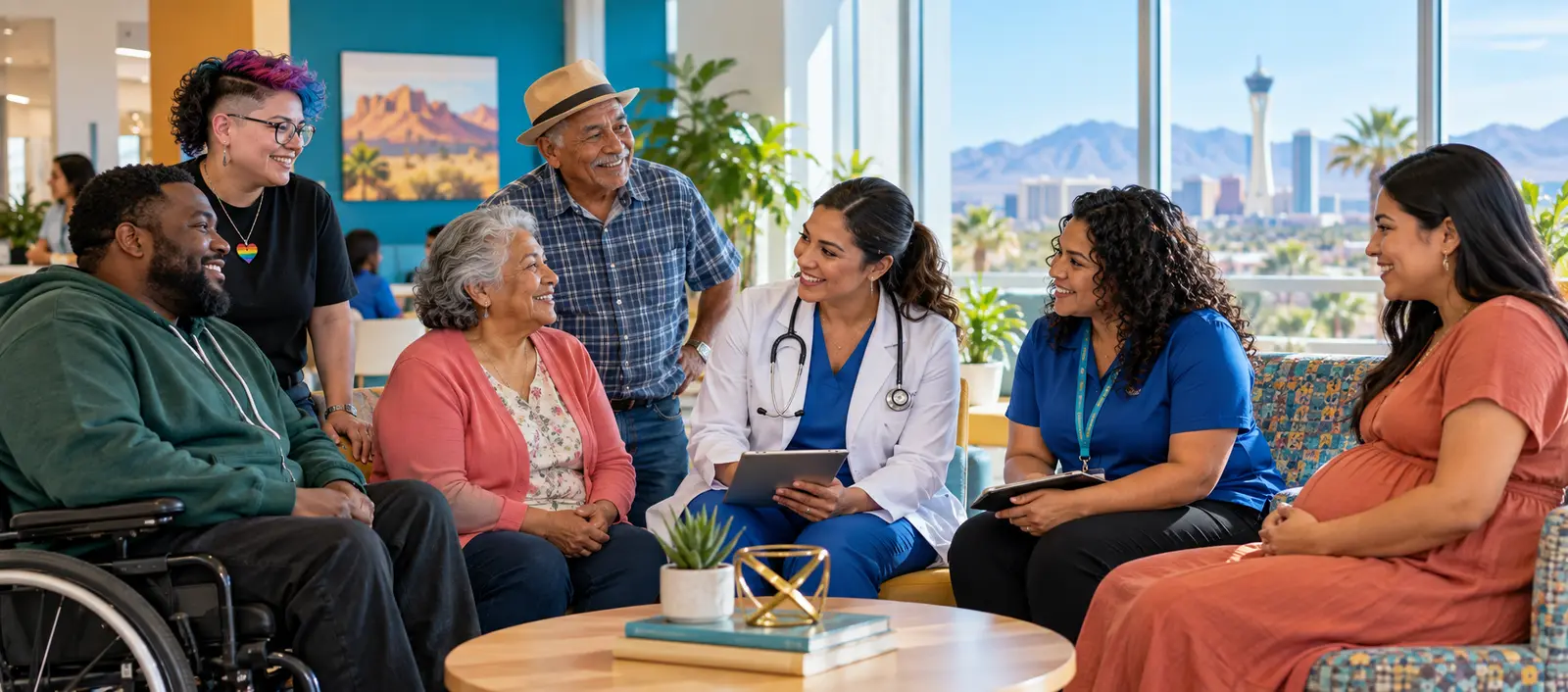
Community members and a clinician discussing care together

The care pathway

One person, one connected plan

This diagram shows how services can work together. The actual plan depends on each person’s needs, choices, eligibility, and available services.

01 · Start anywhere

Tell us what matters

A person may call about a physical, emotional health, HIV care, a chronic condition, or help with food and other needs. The team identifies immediate concerns and the right starting point.

02 · Shared plan

Assess, agree on goals, and coordinate

The patient and care team set priorities, identify who is responsible for each next step, and coordinate information with permission.

04 · Community relationships

Connect beyond the clinic

As appropriate, the team can coordinate referrals to independent specialty providers, laboratories, pharmacies, behavioral health or recovery programs, wholistic medicine and wellness providers, and services for food, housing, transportation, and benefits. Our provider referral pool includes True Balance Integrative Health for independent wholistic care options. Our related community initiatives include WISH and Mama Gloria’s Food Pantry , LVKIP education and engagement, and Freedom Path financial education.

05 · Close the loop

Check the connection and update the plan

When permitted, the team checks whether an appointment or resource connection happened, reviews information that comes back, addresses remaining barriers, and agrees on the next follow-up.
What this looks like

Care can begin with different needs

A person managing diabetes

A primary care visit identifies blood pressure concerns and difficulty getting nutritious food. The clinician and nursing team review treatment and monitoring; chronic disease support helps set goals. A community health worker connects the person to food resources, while care coordination supports a kidney specialist referral if indicated. The team follows up on results and access to services.

A person seeking HIV support

The HIV program offers education and helps connect the person to testing or treatment. If stress, transportation, or other concerns affect care, behavioral health, a community health worker, and care coordination can help. With the person’s permission, the team supports communication with outside clinicians and checks whether the referral was completed.

These examples illustrate a possible pathway; they do not describe a fixed sequence or guarantee a particular service or referral.

One patient · One coordinated plan

How integrated care works

Our clinical teams are designed to share relevant information with appropriate safeguards and coordinate care rather than treating each health need in isolation.

HIV Specialty Provider

HIV treatment, viral suppression, immune monitoring and HIV-related clinical decisions.

Primary Care Team

Preventive care, routine illness, chronic conditions, screening and overall health management.

Behavioral Health Team

Mental health assessment, counseling, emotional wellness and substance use support.

Community Health Workers

Education, navigation, outreach, follow-up and support addressing social needs.

Care Coordination

Referral management, transitions of care and connections with community partners.

Patient and Family

Shared decision-making, informed choices and care goals based on each person's preferences.

Start with a conversation

We’ll help identify the right next step.

Call (725) 710-6608